Your work should look as credible online as it does in the finished room.
I design and build Webflow sites for renovation contractors who have strong projects, a generic website, and more to say than a template can hold.

A generic site makes good work harder to trust.
Homeowners are comparing the quality of your projects, your process, and whether you feel like the right fit. If the proof is buried, the site leaves the most important questions unanswered.
It looks like everyone else.
Same template, same stock hero, same slogan as the three other firms a homeowner has open in another tab.
The best projects are buried.
Your finished rooms sit three clicks deep, after the paragraph about quality and the list of services.
The enquiries are vague.
A name-and-message form means the first call is spent finding out the job isn’t a fit.
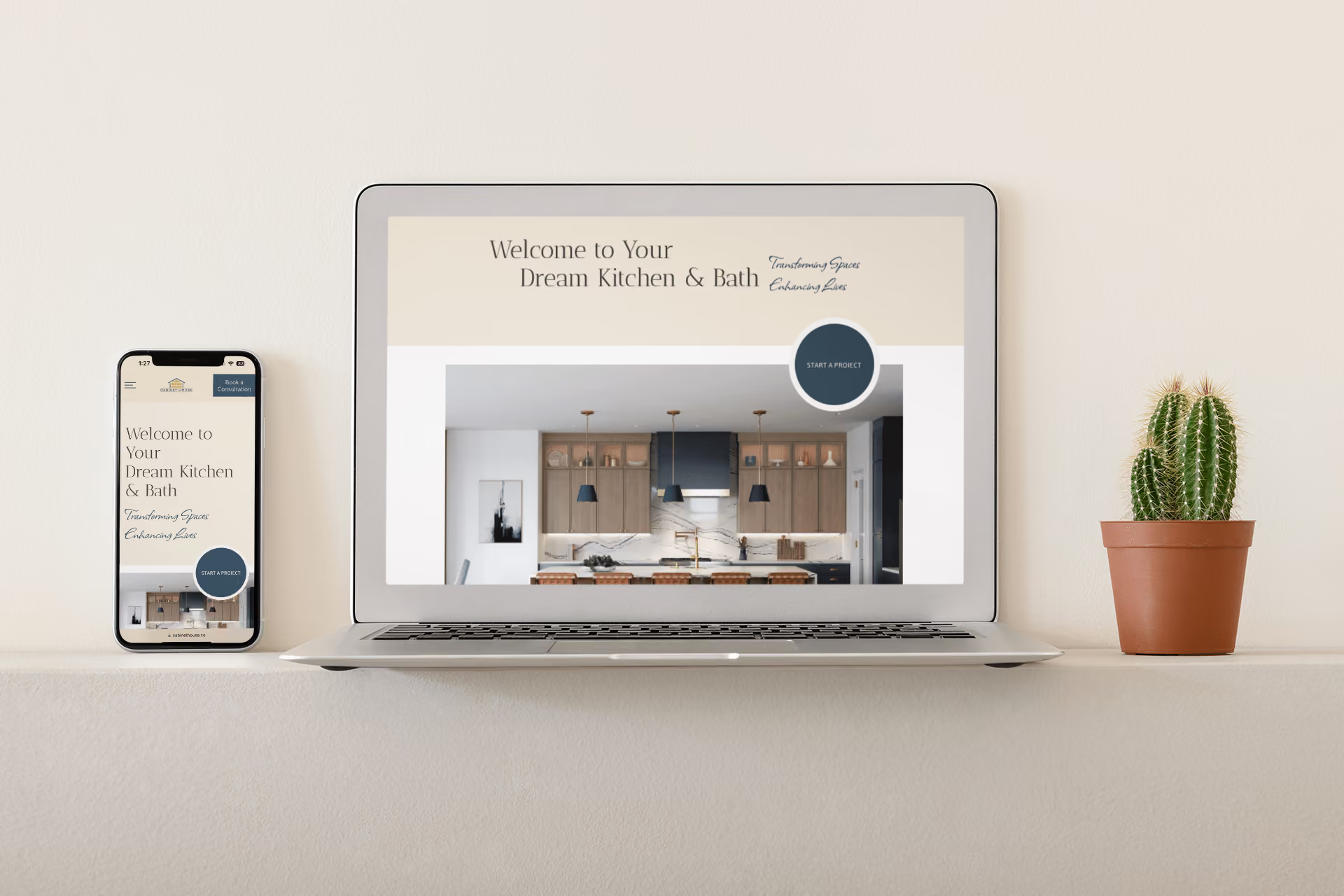
Cabinet House put the craft first.
The previous site buried the work behind a generic template. I reorganized the structure around the customer’s journey, refreshed the brand, and made the projects the first thing visitors see.
“Magnetize did an incredible job redesigning our website. They took the time to understand our brand and created a site that truly reflects our business. We’re thrilled with the outcome and highly recommend them.”

Most homeowners see your site on a phone before anywhere else.
So the first screen does the work: it says what you build, keeps the next step in reach, and gets a finished room in view before the thumb gets bored.
A contractor site is a sales tool first.
Design quality is how it does the job. These four things are the job.
Clarify the services
What you build, where, and for whom — clear enough that the wrong jobs filter themselves out.
Establish trust
Answer the reference question before a homeowner has to ask it.
Show the work
Finished projects up front, organized by the kind of job a visitor is planning.
Route the enquiry
Ask for project type, area and timing, so every call starts qualified.
Structure first. Then design. Then a site your team can run.
I map the people you want to attract, organize the proof they need, and build the result in Webflow — without handing the project between a strategist, designer, and developer.
Map the buyer
Which projects you want more of, and what those homeowners need to see first.
Structure the proof
You approve the sitemap and proof order before anything gets designed.
Launch in Webflow
Designed, built and handed over with a walkthrough, so new projects go up without me.

Matt Kelley. One person, start to finish.
You’re one person, so what’s the risk? Fair question. The upside is that nothing gets lost between a salesperson, a designer and a developer — the person on the first call is the person building the site.
Questions contractors ask.
What does it cost?
Most contractor sites I build land between $2,500 and $4,000, depending on page count and how much structure work is needed. A simple landing page starts at $1,000, and larger builds with extensive project galleries run up to $10,000. The structure phase is a fixed $500 — you approve the sitemap first, and you can stop there if you want.
How long does it take?
Three to four weeks is typical. The variable is how quickly decisions and photos come back, not how fast I build.
Our project photos aren’t great.
Then that’s the first thing we’ll talk about. If the photos can’t carry the work, I’ll say so before anything gets designed — sometimes a half-day shoot is the most useful spend in the whole project.
We cover several towns. How do you handle service areas?
Every area you actually want work in gets a clear mention, and the ones worth it get their own page, so a homeowner two towns over can tell you cover them.
Do you write the copy?
I write the structure and the argument — what gets said, to whom, in what order. If you have a writer, they work from that map. If you don’t, I write it.
Will it rank on Google?
Technical foundations, structure and local metadata are built in. I won’t promise rankings — anyone who does is guessing.
Can we add new projects ourselves?
Yes. Project galleries run on the Webflow CMS, so a finished job is a content update, not a rebuild. You get a walkthrough at handoff.
What happens after launch?
Thirty days of fixes are included. After that, ongoing support is available for a monthly retainer we can discuss.
Thirty minutes. An actual roadmap.
You keep the map whether or not you hire me.
Send your site. I’ll tell you what I’d fix first.
%201%20(1).png)