AT A GLANCE

The project in short

Client

The Cabinet House — a small workshop building custom cabinetry and built-in joinery for private homes and the occasional restaurant fit-out.

Services

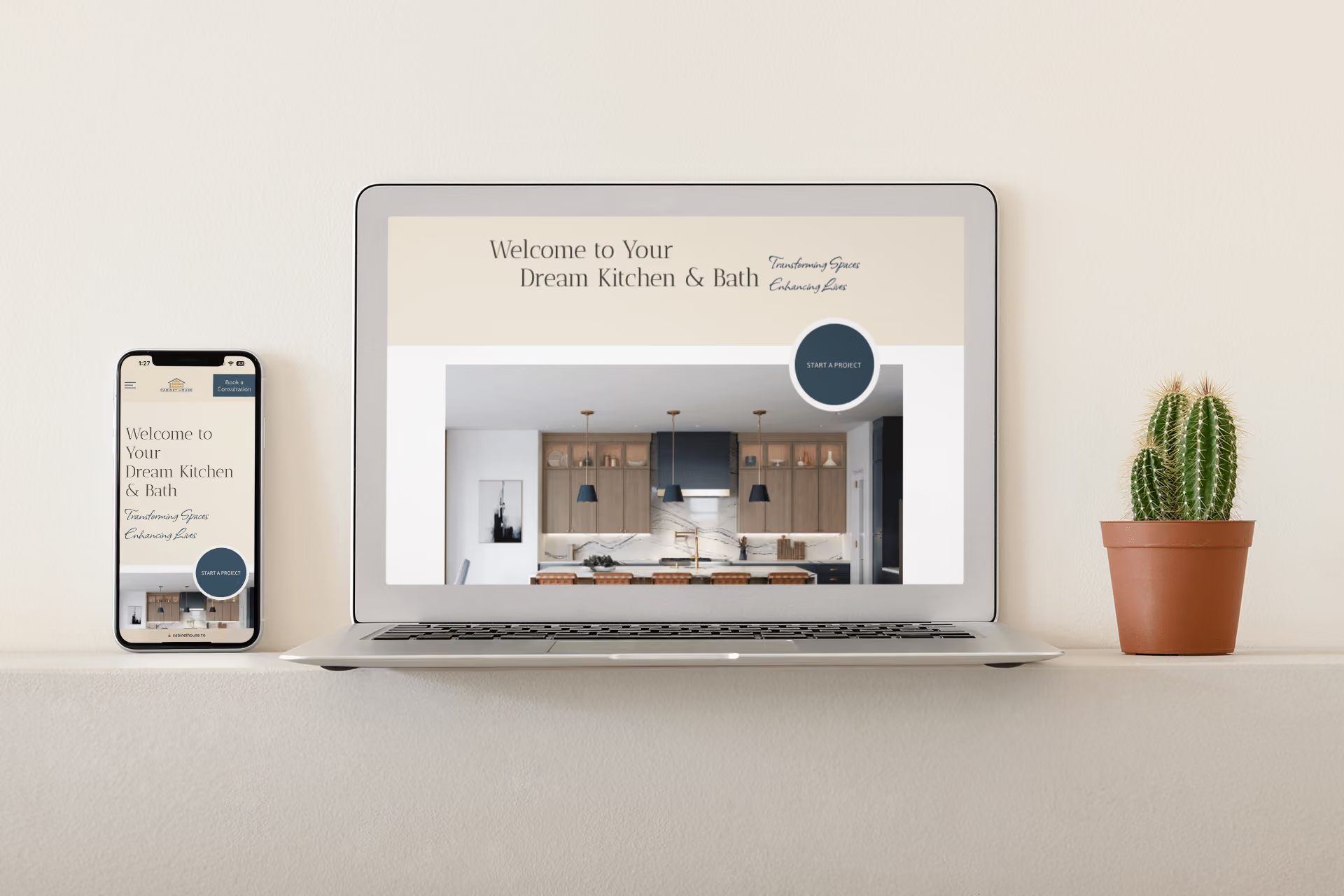
Positioning and messaging, site structure, copywriting, visual design, and Webflow build.

Timeline

Seven weeks, kickoff to launch. Positioning and copy ran first; photography and the Webflow build overlapped in the back half.

Platform

Webflow — fully responsive, CMS-backed, and editable by the client without a developer.

THE CHALLENGE

The work was custom. The website wasn’t.

The Cabinet House builds one-off cabinetry for people who care about the difference between good and exceptional. The old site didn’t make that case. It led with generic category language, buried the portfolio behind a menu, and left the most important question completely unanswered: what actually happens when you commission a piece?

That gap showed up in the enquiries. Prospects arrived unsure whether the work was in their budget, how long a build takes, or how much of the process they’d be involved in — so every conversation started from zero and a fair number never started at all. The site was collecting attention without converting it into the right kind of interest.

Worth saying plainly: none of this was a design problem in the usual sense. The old site wasn’t ugly. It was just describing a bespoke service in the language of a product catalogue, and no amount of restyling fixes that.

There was a second problem, quieter but more expensive. The site was painful to update, so it didn’t get updated. Finished work sat on a phone for months because publishing it meant emailing someone and waiting. A business that lives or dies on its portfolio was running on a portfolio nobody could see.

THE APPROACH

Sell the process, not the product

Started with the buyer

Before touching the design, we mapped what a first-time commissioner actually worries about — cost, timeline, disruption, and whether their taste will survive contact with a craftsman. Those questions became the site’s outline.

Made the process visible

We gave the commission process its own place on the site, broken into plain stages from first conversation to installation. Nothing mysterious, nothing hidden — the thing that felt risky now reads as considered.

Let the work carry the design

The layout got quieter so the joinery could get louder. Generous imagery, restrained type, and a portfolio structured by the kind of project a visitor is trying to picture in their own home.

Wrote it for skimmers

Nobody reads a cabinetry site start to finish. Headings carry the argument on their own, so someone scrolling at speed still lands on the same three points a careful reader would.

THE SOLUTION

A site built for how people actually browse

Most of the traffic arrives on a phone, often in the middle of a renovation and usually at night. So the mobile experience wasn’t an afterthought — it set the constraints. Short, decisive sections. Portfolio images that load fast and fill the screen. A single, obvious next step on every page.

The sitemap got shorter and more opinionated — Work, Process, About, and Contact, each answering one question in the order a buyer actually asks it. Fewer pages meant every page could afford to be specific instead of hedging across three audiences at once.

Behind the scenes, the portfolio runs on the Webflow CMS. Adding a finished project is now a matter of uploading photos and writing a few lines — no developer, no ticket, no waiting. The site can keep pace with the workshop instead of falling a year behind it.

Performance did more work here than it usually gets credit for. Cabinetry photography is heavy, and a lot of this audience is browsing on ordinary home wifi. Images are served responsively and lazily so the portfolio arrives fast — people keep scrolling instead of giving up two projects in.

Let's Work Together

Are you ready to finally have clarity?

Whether you need a full site build or want to redesign but don't know where to start  — get in touch. I'll answer your questions and outline concrete, actionable steps, regardless if we end up working together. No hard sell, just a conversation.